
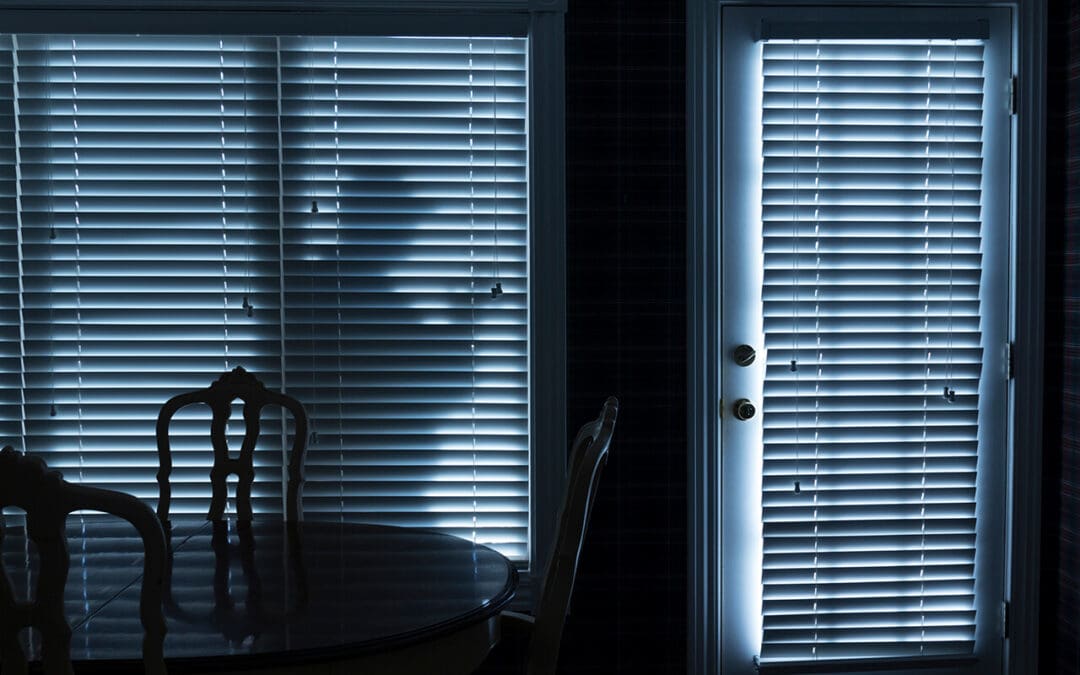
Most homeowners think about home security in terms of hardware: locks, cameras, alarm systems. But some of the most effective ways to keep your home safe have nothing to do with equipment and everything to do with daily habits and routines that make a home a consistently harder target. Building those habits is one of the most accessible and effective things a homeowner can do to keep your home safe year-round.
The Daily Habits That Help Keep Your Home Safe
The simplest security habits are the ones that get skipped because they seem trivial. Locking doors and windows consistently, including interior garage doors and sliding glass doors with secondary bar locks, is the foundational habit no technology replaces. A survey of convicted burglars consistently finds that unlocked entry points are among the most frequently exploited vulnerabilities. Mail and package management is a daily routine with real security implications. A mailbox overflowing with envelopes and a front porch stacked with packages are reliable signals that a home is either unoccupied or inattentive. Packages delivered while the household is away should be redirected to a neighbor, scheduled for later delivery, or retrieved promptly. During extended travel, USPS mail holds and regular package pickup by a trusted neighbor remove the most visible indicators of absence.
Social media habits that inadvertently announce absence from the home are a modern security consideration most homeowners underestimate. Posting vacation photos in real time or checking in at out-of-town locations communicates the same information as leaving a note on the front door. Sharing travel experiences after returning, rather than while away, is the habit that keeps your home safe from the specific risk that social media creates.
How Visibility and Lighting Keep Your Home Safe
The physical environment around the home shapes risk in ways that go beyond locks and alarms. Lighting and visibility are two of the most consistently documented deterrents in residential security research. Exterior lighting activated by motion at all entry points eliminates concealment that dark exterior areas provide. A motion light that activates when someone approaches draws immediate attention from neighbors and passersby in a way that static lighting doesn’t. Placement at every potential entry point rather than just the front is what makes exterior lighting an effective tool to keep your home safe rather than a cosmetic feature.
Sightlines from the street to entry points matter too. Dense landscaping directly adjacent to doors and windows provides cover for anyone working at those points. Keeping plantings near the structure trimmed low, below window sills, and replacing solid foundation shrubs near entries with more open plantings removes the concealment that opportunistic access attempts rely on.
Neighborhood Habits That Protect Long-Term
The single most effective tool for residential security is an engaged neighborhood. Homes in areas where neighbors know each other, watch for anomalies, and communicate about unusual activity are demonstrably safer than those where no one is paying attention. Knowing your immediate neighbors well enough to recognize whose vehicles and activity are normal creates a level of awareness no camera system replicates. Participating in or forming a neighborhood watch, sharing contact information with neighbors on either side, and establishing a mutual check-in arrangement when someone is traveling creates a social infrastructure that deters the low-profile reconnaissance that precedes most residential incidents.
Communicating privately with neighbors about planned absences allows someone who knows your routine to notice when something is off. A trusted neighbor who knows you’re traveling can report an unfamiliar vehicle parked in the driveway or a stranger testing the side gate in a way that a camera can capture but cannot act upon.
Frequently Asked Questions (FAQs)
What are the easiest and most affordable ways to keep your home safe?
The highest-return habits cost nothing: locking every door and window consistently, managing mail and packages so they don’t signal absence, trimming concealment landscaping near entries, and knowing your neighbors. After these behavioral habits, motion-activated exterior lighting at every entry point is the most cost-effective equipment addition.
How do I keep my home safe while traveling for an extended period?
Place a USPS mail hold, arrange for package pickup or redirect deliveries, and ask a trusted neighbor to vary the appearance of the property periodically. Timers on interior lights that vary the on/off pattern create the appearance of occupancy more effectively than lights left on continuously, which become recognizable as a pattern rather than evidence of presence.
Does a home security sign or camera decal keep your home safe even without a system?
Security signage creates some deterrent effect for opportunistic actors, but it’s less effective than actual visible equipment. A visible camera combined with signage produces more deterrent than signage alone. Physical hardening of entry points, good lighting, and occupied-looking habits produce more deterrence than any signage.
What time of day is home security most important?
Statistically, residential burglaries occur most frequently during daytime hours, between 10 AM and 3 PM on weekdays, when occupancy rates are lowest. This is counterintuitive to most homeowners who focus on nighttime security.
How do I know if my neighborhood has a watch program and how do I start one?
Most local police departments maintain a registry of active neighborhood watch programs and can connect residents with their nearest group. If no program exists, starting one is as simple as connecting with immediate neighbors, establishing a group text for sharing unusual observations, and registering with the local police department, which typically provides resources at no cost. An informal network of attentive neighbors is the starting point that formal watch programs grow from.
HomeVantage Home Inspections provides termite inspection services to homebuyers and sellers in Northern New Jersey. Contact us to schedule an appointment.