
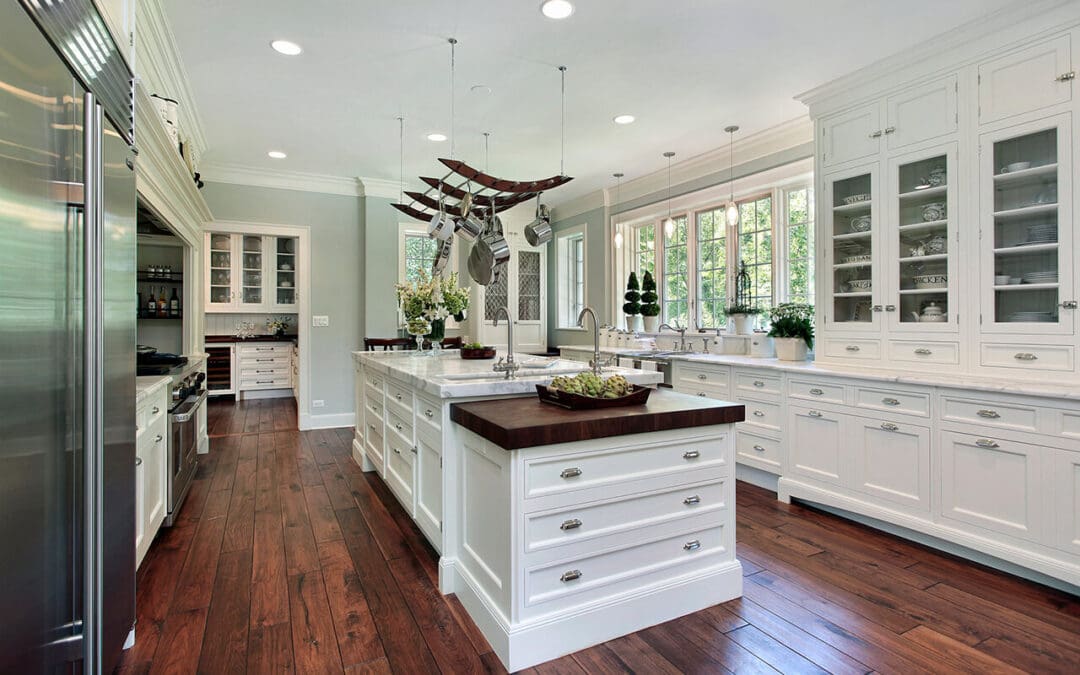
The countertop material a homeowner selects has to perform at the level the household requires while meeting the aesthetic goals the renovation is trying to achieve, and those two requirements don’t always point to the same answer. Understanding how the most common materials compare on durability, maintenance, heat and scratch resistance, and cost is what makes the selection a confident, informed decision rather than one driven purely by appearance.
Comparing Countertop Material Options for Every Kitchen and Bathroom
Granite is the natural stone countertop material that dominated kitchen design for decades and remains one of the most popular choices for homeowners who want a durable, heat-resistant surface with the visual depth and natural variation that no manufactured material fully replicates. Each slab is unique, which means the material selected from a sample will look similar but not identical to the finished installation. Granite requires annual sealing to maintain stain and moisture resistance, and edges can chip if struck with significant force. Quartzite, not to be confused with quartz, is a natural metamorphic stone that combines dramatic veining with hardness comparable to granite, making it more practical for active kitchens that want the aesthetic of marble without its vulnerability to etching from acidic foods.
Quartz: The Engineered Countertop Material That Dominates Modern Kitchens
Quartz, engineered from ground quartz crystals bound with resin, is the countertop material that most consistently balances performance, aesthetics, and low maintenance. Unlike natural stone, quartz is non-porous, no sealing required, resistant to staining, and consistent in color and pattern across the slab, which simplifies matching across seams. The limitation of quartz is heat sensitivity, the resin binders can be damaged by direct heat from hot pots, requiring trivets in a way that granite doesn’t. Quartz is also not an appropriate outdoor countertop material because prolonged UV exposure causes discoloration in most product lines.
Butcher Block, Laminate, and Concrete: The Alternatives Worth Considering
Butcher block is the material that most effectively introduces warmth and organic texture into a kitchen, and the one that requires the most consistent maintenance to perform well over time. Regular oiling with food-safe mineral oil prevents the wood from drying, cracking, and absorbing moisture, and the surface will show knife marks and water rings without consistent care. Properly maintained butcher block develops a patina over time that many homeowners find more appealing than the flawless surface it started with. Laminate has undergone a significant transformation, modern laminate products replicate the appearance of stone, wood, and concrete convincingly and at a fraction of the cost of the materials they mimic. The limitations of laminate are its vulnerability to heat damage, the difficulty of repairing chips or burns at the edge profile, and the visible seams that high-resolution stone and wood alternatives don’t produce. For homeowners with a limited renovation budget, laminate is the countertop material that produces the most visual improvement per dollar invested.
Concrete is the material most suited to homeowners who want a fully custom, one-of-a-kind surface, it can be cast in any shape, tinted to any color, and finished with varying levels of texture and sheen. Concrete requires sealing and periodic maintenance, can crack over time with structural movement, and carries a significant cost premium relative to most other countertop materials.
Frequently Asked Questions (FAQs)
Which countertop material is the most durable for an active kitchen?
Quartz and granite are the countertop materials that most consistently perform well in high-use kitchens; both are hard, scratch-resistant, and capable of withstanding daily contact. Quartz has the advantage of being non-porous, making it more stain-resistant without maintenance. Granite is more heat-resistant but requires annual sealing. For households with children, heavy cooking activity, and minimal patience for maintenance, quartz is typically the countertop material that performs best over time.
What is the most low-maintenance countertop material?
Quartz requires no sealing, no special cleaning products, and consistent performance without periodic treatment, making it the lowest-maintenance option. Solid surface materials like Corian are a close second and have the additional advantage of repairability. Scratches can be sanded out rather than lived with permanently. Natural stone countertop materials all require periodic sealing and careful attention to spills.
Is marble a practical material for a kitchen?
Marble is beautiful but demanding in kitchen applications; it etches readily from acidic substances like lemon juice and vinegar, and stains more easily than granite or quartz. Homeowners who cook actively and value a pristine surface are frequently disappointed with marble in a kitchen context. For bathrooms, where acid and heat exposure is less intense, marble is a more practical countertop material choice and more widely considered.
How does countertop selection affect home resale value?
Countertop material is one of the kitchen features buyers evaluate most carefully. Quartz and granite are the countertop materials buyers most consistently respond to positively in resale contexts, signaling investment and durability. Laminate countertops in an otherwise renovated kitchen can undermine the overall impression; upgrading the countertop material is frequently the renovation decision with the most direct impact on buyer perception.
HomeVantage Home Inspections provides home inspection services to homebuyers and sellers in Northern New Jersey. Contact us to schedule an appointment.