
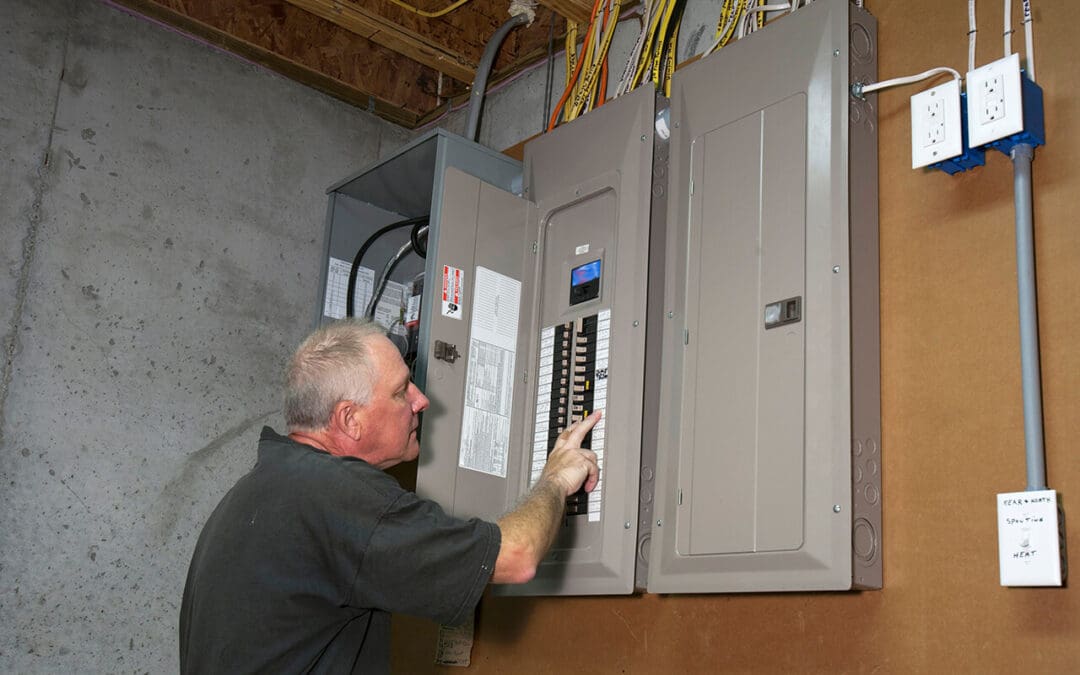
The circuit breaker panel is the heart of your home’s electrical system, yet most homeowners open the door only when the lights go out. Understanding how it works and what it’s telling you can prevent frustration and help you spot hazards early. A circuit breaker is a safety device designed to shut off power when a circuit draws too much current, and when one trips repeatedly or behaves oddly, your home is sending you a message. Here’s how to read your panel, respond to trips, and know when to call an electrician.
How a Circuit Breaker Panel Works and How to Read It
Your panel has a main breaker, which shuts off power to the entire house, and a row of smaller breakers that protect individual circuits. Most lights and outlets are on 15 or 20 amp breakers, while large appliances such as a dryer, range, or air conditioner use double-width 240-volt breakers. Take time to make a map. Turn breakers off one at a time, note what loses power, and update the directory label on the door so you can find the right one in an emergency. If you run a lot of equipment in one room, such as a home office, note which circuit feeds it so you can avoid overloading it. Some breakers are AFCI or GFCI types, which protect against arc faults and shock hazards and have a test button. Keep the area in front of the panel clear, and leave the cover removal to an electrician.
What to Do When a Breaker Trips
Most trips are caused by overloading, such as running a space heater, hair dryer, and microwave on the same circuit. Unplug the devices on that circuit, push the breaker firmly to the off position, and then back on. If it holds, spread your loads across more circuits. If an AFCI or GFCI breaker trips, press its test button before resetting it, since these devices can detect hazards that standard breakers miss. A circuit breaker that trips again immediately points to a short circuit or ground fault, and you should stop and call an electrician rather than reset it repeatedly. Never tape a breaker in place, and never replace it with a larger one, since the breaker is sized to protect the wiring behind it, not the devices plugged into it.
Warning Signs Your Circuit Breaker Panel Needs Attention
Some signs mean you should call an electrician promptly. Buzzing, crackling, or a burning smell near the panel, a cover that is warm or discolored, scorch marks, rust, or moisture inside are all red flags. Moisture in a basement panel is especially serious, so fix the source and have the panel checked before turning anything back on. So are breakers that feel loose, won’t reset, or trip for no clear reason, and lights that flicker or dim when appliances turn on. Certain older panel brands, including Federal Pacific and Zinsco, have known safety concerns, and homes that still use fuses may be due for an upgrade. Don’t wait on these issues, since they can lead to overheating and fire.
Plan for Upgrades and Safety
Many older New Jersey homes have 60 or 100 amp service that struggles with modern demands. As homeowners add electric vehicle chargers, heat pumps, kitchen upgrades, and additions, a circuit breaker panel with limited capacity can become a bottleneck. A licensed electrician can evaluate whether a 200 amp upgrade makes sense, and the work requires a permit and inspection. Ask about whole-house surge protection, and about adding AFCI and GFCI protection where current code calls for it. Take a few minutes once a year to look at the panel for signs of rust or moisture, and keep the directory up to date.
Frequently Asked Questions (FAQs)
How do I reset a tripped breaker?
Unplug devices on that circuit, push the breaker firmly to off, then back to on. If it trips again right away, stop and call an electrician.
Why does the same breaker keep tripping?
It may be overloaded, or it may be protecting against a short or ground fault. Repeated trips deserve a professional’s attention before they become a hazard.
How long do panels and breakers last?
Panels often last decades, but breakers can wear out. Age, brand, and condition all matter, so have an electrician evaluate an older panel.
Can I replace a breaker myself?
It’s best left to a licensed electrician, since the panel contains live parts even when the main is off, and the breaker must match both the panel and the wiring.
What is the difference between a breaker and a GFCI?
A standard breaker protects wiring from overload. A GFCI protects people from shock by shutting off power when it detects a ground fault, especially in wet areas.
HomeVantage Home Inspections provides home inspection services to homebuyers and sellers in Northern New Jersey. Contact us to schedule an appointment.